Many forms of trauma come from a feeling of powerlessness, lack of choice and control and are often experienced in relation to other people. Other people can be the sources of the trauma itself. This can make it difficult for people with lived expereince of trauma to trust and feel safe around 𝘯𝘦𝘸 people. Which make sense, doesn’t it?
🏛️ So how do we, as arts and museums professionals/organisations, build a sense of safety and demonstrate our trustworthiness? Well, if you’re looking for a simple, magical one-stop fail-proof solution that instantly solves this highly complex problem and fits easily into a blog post then… I got news for you, trauma-informed practice is not a checklist or cool infograph.
But here’s one thing I can tell you in a blog post – consistent acts of openess, transparency and choice signal safety to the traumatised body.
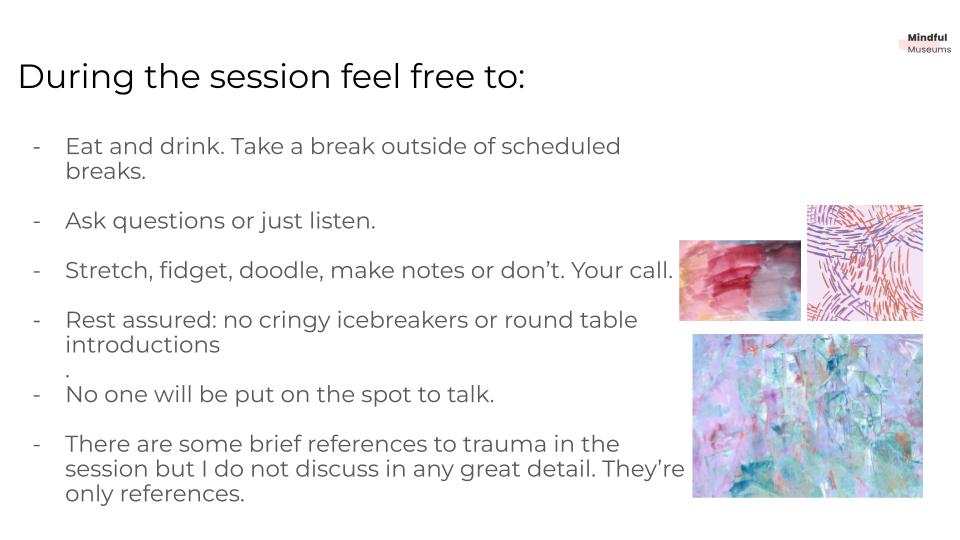
Pictured above: A page from my pre-training pack that is sent to participants a week before the training session.
Telling people what to expect when they walk through the door, into the studio… Sending photos of the room where the project will take place or a photo of the artist who is delivering the session. Being clear about information that you assume everyone knows – that entry is completely free, they can talk in the galleries and take photos or there’s a place to eat their packed lunch… and.. I could go on and on.
But you get the picture – openness, transparency, consistency, choice. All signal safety.
📝 If you’re interested in the theory and pracitical implementation of trauma-informed practice in arts, culture and heritage sites then get in touch –
📧 mindful.museums@gmail.com
 Louise Thompson