One piece of feedback I hear time and again is how relevant my trauma-informed practice training feels to the everyday work in museums, galleries and heritage sites. I really love hearing that.
Having worked in the cultural sector for over 20 years, including in a large public art museum, I bring an understanding of the environments, relationships and challenges colleagues work with.
It’s not just trauma-informed practice training – it’s tailored to the specific contexts and everyday realities of our cultural sector. I draw on real situations I’ve encountered, alongside scenarios teams bring from their own practice, to explore how trauma-informed principles can be applied in their roles – Learning, Curatorial, Visitor Experience and lots more.
It meant a lot to me when Wellcome Collection colleagues said the training felt practical, relevant and grounded in their work-life. That’s the best feedback.
#FeedbackFriday\
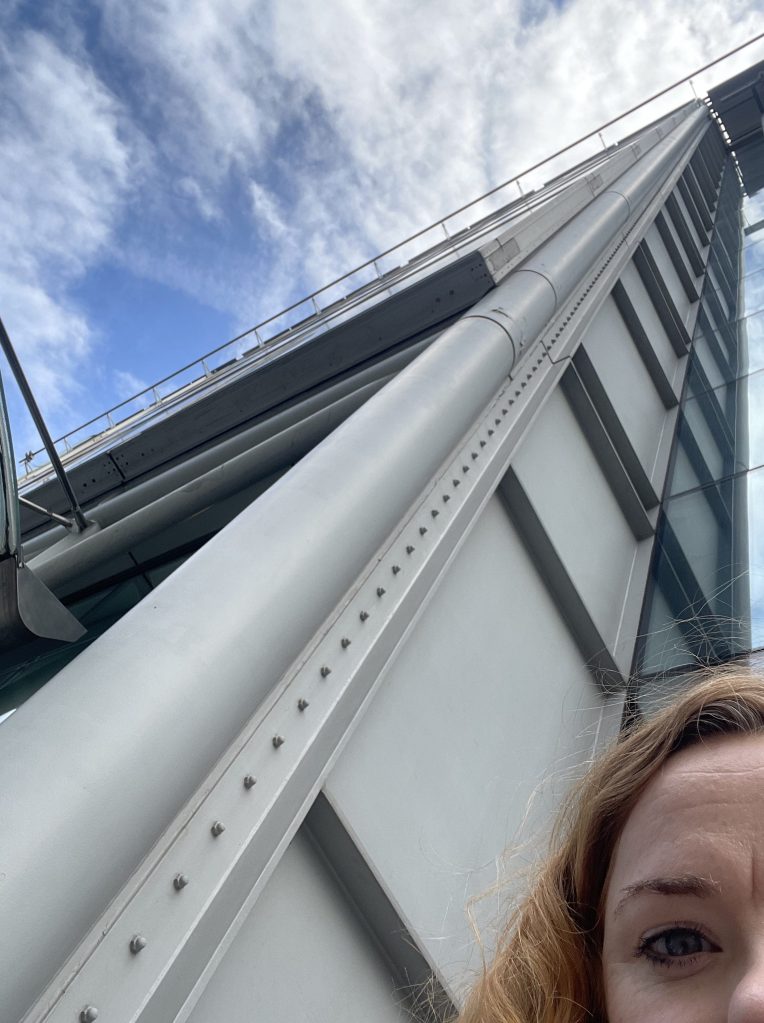
Pic: Me standing outside Wellcome Collection after delivering a full day of “Introduction to Trauma-Informed Practice for Public Facing teams.”
Over the past several years, I’ve delivered trauma-informed practice training for museums and galleries in the UK and abroad. One of the most interesting parts of this work has been hearing how museum workers understand or interpret the term before the session begins.
I’ve compiled a list of some of the most common misconceptions I’ve come across. Because, well, we all love a list, don’t we?
myth v reality
Myth: Museum professionals being expected to diagnose, treat or heal trauma. Reality: That’s the role of qualified clinicians, therapists and health professionals. The role of cultural professionals is to work safely and in a way that is sensitive & supportive to people with lived experience of trauma, recognise the limits of their role and know when specialist support may be needed.
Myth: Trauma-informed practice is just another term for repatriation or decolonising practice. Reality: These approaches can intersect and support one another, but they are not the same thing.
Myth: It’s about each member of your team informing you of their personal traumas so that you can manage or lead them better. Reality: Definitely not, there is not need for people you work with to disclose their personal experiences to their line managers or colleagues.
Myth: Trauma-informed practice means asking colleagues, visitors or communities to disclose traumatic experiences so these can inform an exhibition or workshop. Reality: People should not have to share very personal experiences to engage or feel they belong in a museum or gallery. They may chose to and it’s important to have the right conditions set up inadvance for this to happen in order to support both the public and staff. It’s not about extracting information from already traumatised peoples.
Myth: Cultural professionals need to become experts in trauma. Reality: Trauma-informed dentists, teachers, care assistants and yoga teachers remain experts in their own professions – and museum and gallery staff remain experts in theirs. Additional training simply helps us do our work in ways that are more sensitive to people who may have experienced trauma.
Myth: Trauma-informed practice is only relevant when working with people known – or assumed – to have experienced trauma. Reality: We rarely know what someone may be carrying. Trauma-informed practice applies across our work with all visitors, communities and colleagues.
Myth: One workshop means the work is done. Reality: Trauma-informed practice is an ongoing commitment to learning, reflection and applying its principles across our spaces, relationships and ways of working.
It is totally understandable that people may be unsure about – or misunderstand – what trauma-informed practice in the arts means. That is exactly what learning and development sessions are for: to build shared knowledge, deepen understanding and develop practical skills.
If you’d like to book me for a training session or consultancy support – get in touch via mindful.museums@gmail.com
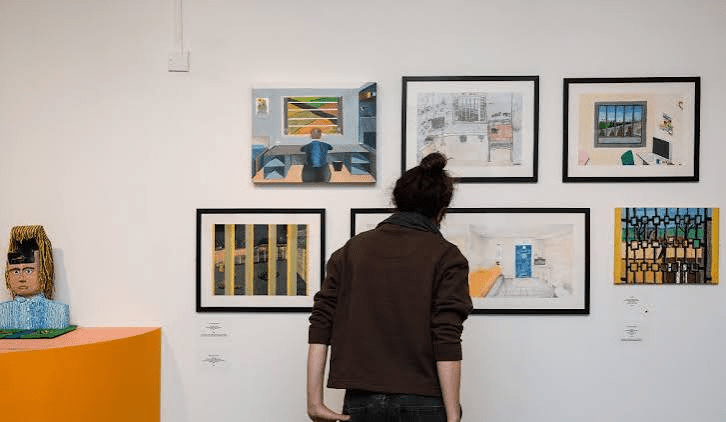
This week it was a pleasure to work with Koestler Artsin introducing trauma-informed practice within an arts organisation. Koestler Arts is an incredible organisation, running an exhibitions and awards programme that celebrate artwork created by people in prison.
The training explored:
Understanding trauma and how it impacts people
Trauma-informed principles in practice – safe & supportive approaches when working alongside communities with lived experience
Looking after ourselves and each other – Emotional labour & staff wellbeing
The 3 levels of care: self-care, team care & organisational care
At the end of every training session, I ask participants one simple question:
“What’s one small action you’ll take straight away?”
Not a complete overhaul. Not a new strategy. Just one change they can implement immediately.
Here’s what they wrote:
Introduce meetings with no agenda for team reflection.
Making time to have check ins after sessions and counting that as part of the ‘work’ rather than an ‘if we have time’ type thing.
Thinking about how we could locate or create a quiet space in the building during our curation sessions.
Make time for team debriefs after friends and family days.
Think about how we can make sure mentors can create quiet, safe spaces at every mentoring session.
I think better acknowledging “continuous” informed consent – thinking of how to make people feel comfortable if they want to.
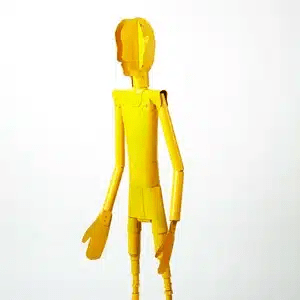
Yellow Man, Fromeside Clinic, Platinum Award for Sculpture, 2017
Start small to build big.
Small actions like these are how culture changes – one conversation, one habit and one act of care at a time. Trauma-informed practice is not something we implement simply for our community groups or service users – it’s a holistic approach. It starts with us. The staff. How we treat each other, as well as how we work with the public.
It was a privilege to spend time with such a committed and reflective team.
If you’re interested in bringing trauma-informed practice into your arts or cultural organisation, I’d love to hear from you.
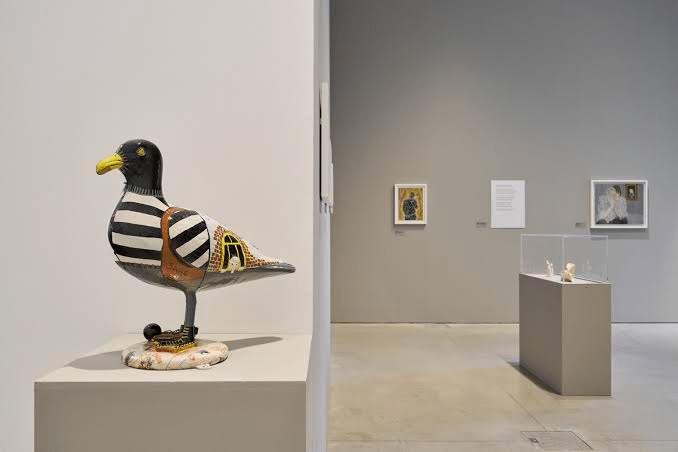
Queen Mother of Africa, HM Prison Dovegate, Painting, acrylic & ceramic on board, 2021
Many forms of trauma come from a feeling of powerlessness, lack of choice and control and are often experienced in relation to other people. Other people can be the sources of the trauma itself. This can make it difficult for people with lived expereince of trauma to trust and feel safe around 𝘯𝘦𝘸 people. Which make sense, doesn’t it?
🏛️ So how do we, as arts and museums professionals/organisations, build a sense of safety and demonstrate our trustworthiness? Well, if you’re looking for a simple, magical one-stop fail-proof solution that instantly solves this highly complex problem and fits easily into a blog post then… I got news for you, trauma-informed practice is not a checklist or cool infograph.
But here’s one thing I can tell you in a blog post – consistent acts of openess, transparency and choice signal safety to the traumatised body.
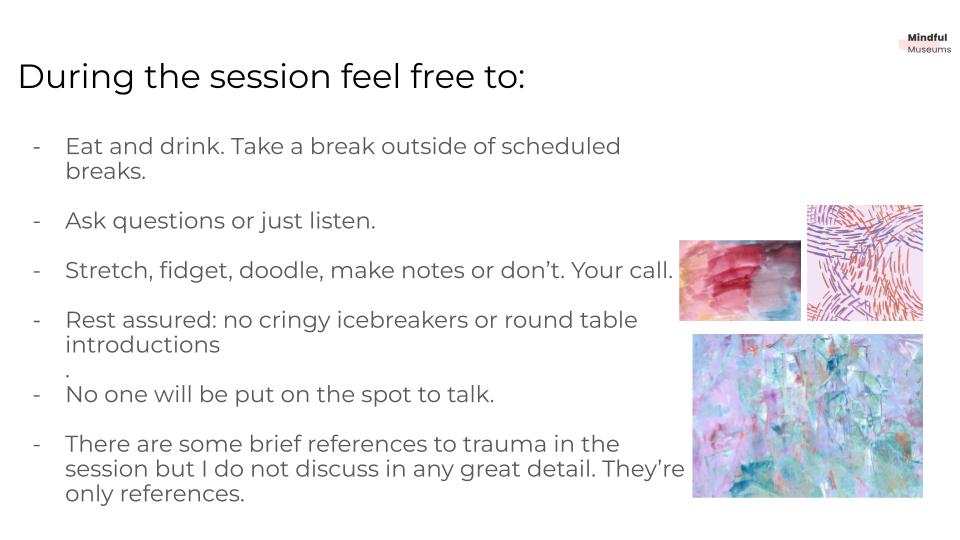
Pictured above: A page from my pre-training pack that is sent to participants a week before the training session.
Telling people what to expect when they walk through the door, into the studio… Sending photos of the room where the project will take place or a photo of the artist who is delivering the session. Being clear about information that you assume everyone knows – that entry is completely free, they can talk in the galleries and take photos or there’s a place to eat their packed lunch… and.. I could go on and on.
But you get the picture – openness, transparency, consistency, choice. All signal safety.
📝 If you’re interested in the theory and pracitical implementation of trauma-informed practice in arts, culture and heritage sites then get in touch – 📧 mindful.museums@gmail.com
I first met Jules Wooding, Museum Manager at the Cumbria’s Museum of Military Life, through one of my online Trauma-Informed Practice in Museums training sessions for the Northern Military Museums Network in early 2026.
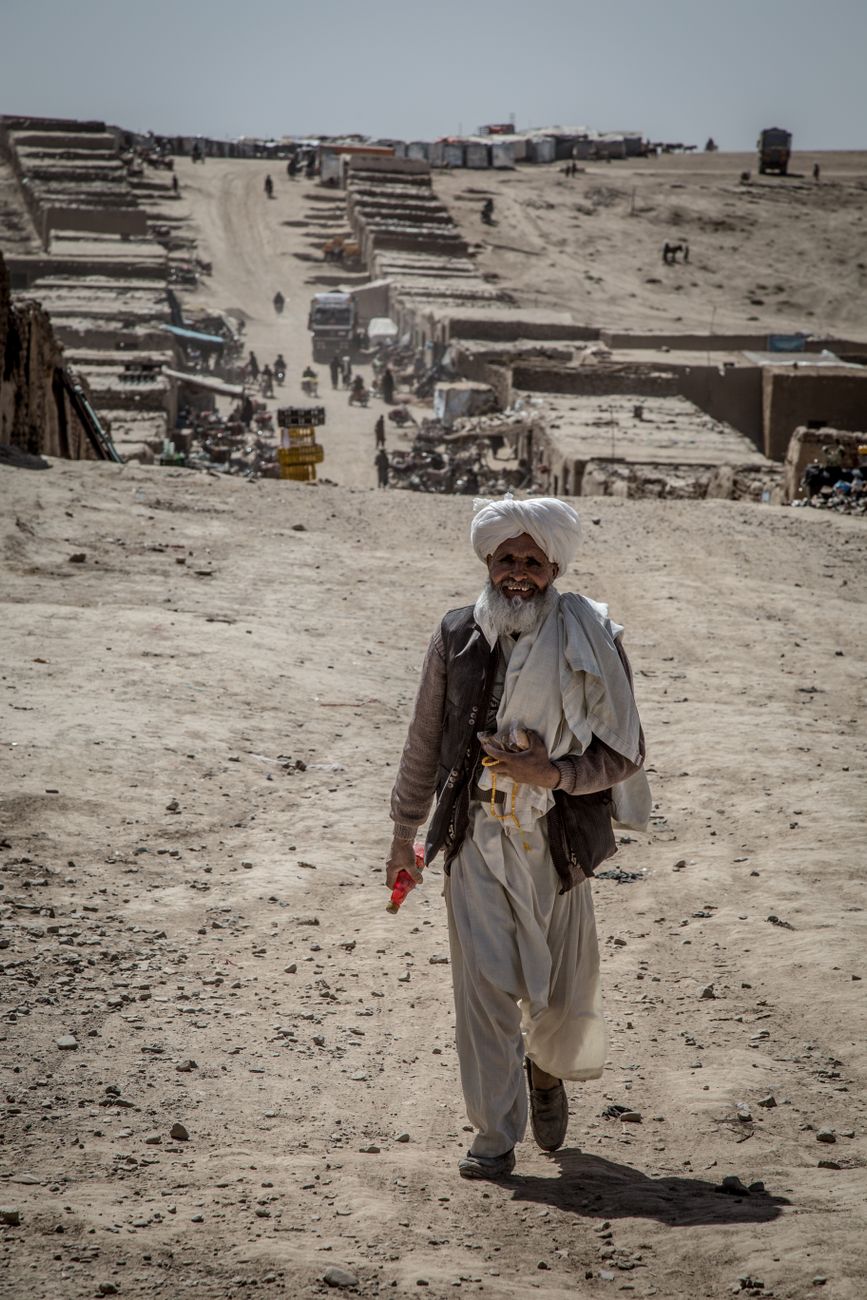
During the session, Jules shared the story of Blood, Sweat and Tears, an exhibition co-created with veterans who had served in Afghanistan. As she spoke, I was struck by how naturally the project embodied many of the principles that underpin trauma-informed practice. Later, I asked if we could talk in more detail about how the project had evolved. This is Jules’s story.
After securing funding, Jules organised an open day for veterans. What followed was not a traditional consultation exercise. Instead, veterans began talking to one another, sharing memories and experiences. As Jules put it, “I just started asking questions… and then the interaction started.”
The museum created a space where people could engage on their own terms. This reflects the trauma-informed principle of safety, allowing participants to contribute without pressure or expectation.
As conversations developed, so did the project. Veterans recommended it to others and participation grew organically. “They then started talking to people who talked to people,” Jules recalled. Ultimately, more than 30 veterans became involved.
Importantly, the exhibition focused on everyday experiences rather than military operations. Participants talked about food, water, sleeping arrangements, communication with home and daily routines. Jules remembered asking, “What was it like for you?… How did you go to the toilet? How did you sleep?”
For many veterans, this opportunity to talk was significant. Jules explained that some felt when they returned from Afghanistan, people believed they already understood the conflict because they had followed it through the media. As a result, “they didn’t feel that they could talk about it.”
The project therefore became about much more than creating an exhibition. It became, in Jules’s words, “their opportunity for their voice.”
One of the most important aspects of trauma-informed practice is creating opportunities for people to feel heard, acknowledged and understood. The museum didn’t tell veterans’ stories for them. Instead, it created a platform where they could share experiences in their own words and decide how those experiences would be represented.
As Jules explained, “It wasn’t about us telling their story… it had to be their words.”
This commitment to choice, collaboration and empowerment extended throughout the project. Participants helped shape the exhibition, contributed photographs and objects and even decided how the resulting film should be used. When asked whether it should be made publicly available online, they chose not to – and their decision was respected.
The final exhibition had a profound impact. One participant later told Jules, “I watched it and I cried.” Others described feeling recognised and understood through the process. Projects like Blood, Sweat and Tears remind us that museums can be far more than places that preserve objects and interpret history. They are spaces where people feel seen, where experiences are witnessed and where stories that might otherwise remain untold can be shared, valued and preserved for future generations.
Special thanks to Jule Wooding, Museum Manager of Cumbria’s Museum of Military Life.
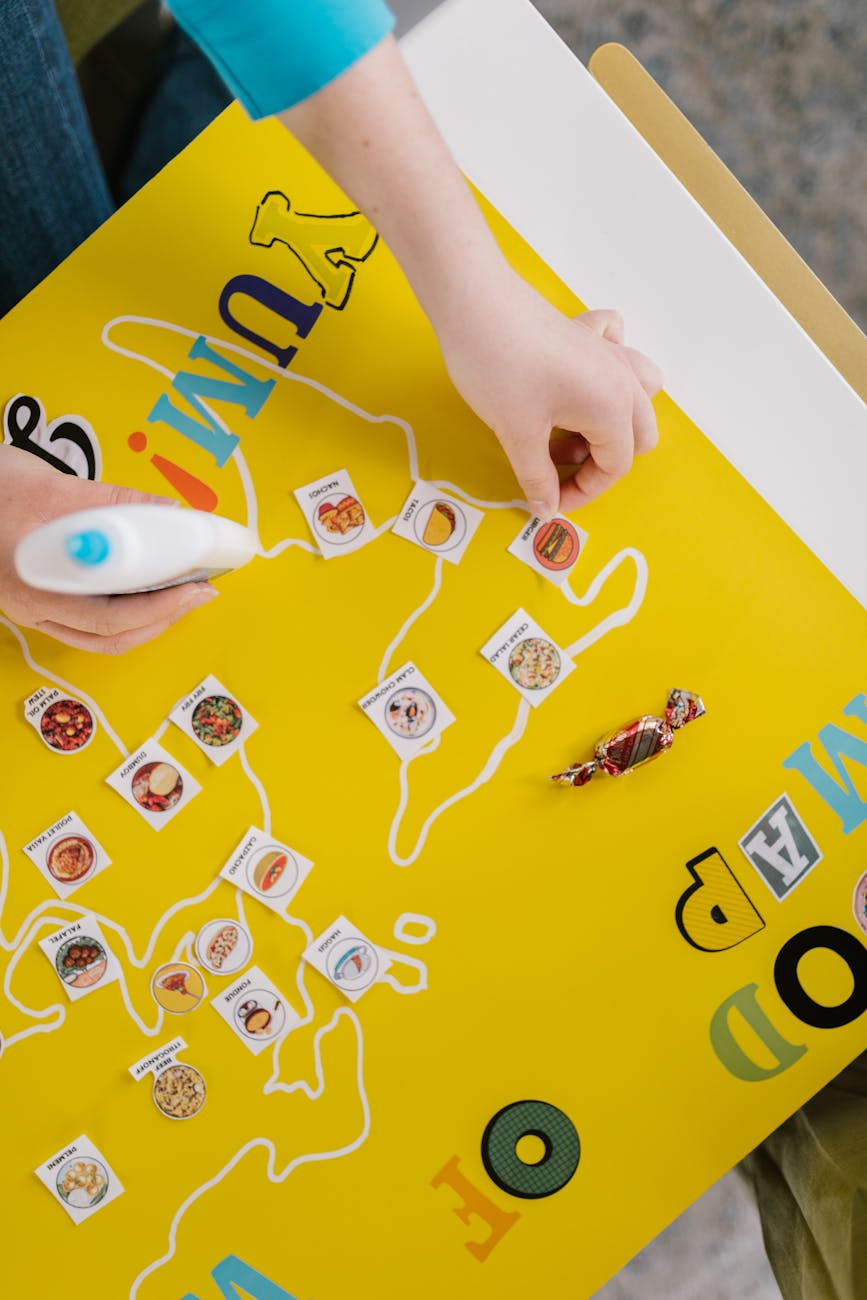
📌 I can stick a pin in Lithuania on my map of the world museums I’ve worked with! I’m determined to work with a museum in every country in the world. Will I achieve this ambition? Probably not, ha! But I’m having a lot of fun trying.
Here’s some lovely feedback I received about my popular session Mindful in the Museum – engaging with art and objects using mindfulness to support visitor wellbeing.
Happy St. Patrick’s Day, everyone. It is a glorious blue sky here in Manchester, the blossom is out and I’m wearing my green cardigan. I’ve decided it’s going to be a good day. ☘️
In some ways that’s thanks to the work of Dr James Doty, founder and director of the Center for Compassion and Altruism Research and Education in Stanford University.
Dr Doty’s work taught me about the neuroscience behind mindfulness. He spoke about the power of kindness, compassion and the belief that we can all have impact on other people’s lives. Especially those who have had challenging beginnings.
Even if we only meet them for a short period, or even just once. Every interaction is an intervention.
how we treat visitors really matters…
When I talk about trauma-informed practice in museums and galleries I talk about the importance of creating welcoming spaces.
Dr Doty famously had a similar intervention from a kind woman who worked at a magic shop in a mall. He was a child living in a troubled and chaotic home and this stranger’s kindness changed the path of his life.
No matter who you are or what you do, how you treat people matters. Even if you only meet them once. 𝗜𝘁 𝗿𝗲𝗮𝗹𝗹𝘆 𝗱𝗼𝗲𝘀 𝗺𝗮𝘁𝘁𝗲𝗿.
Dr James Doty sadly passed away this week but his work and legacy will live on in the neuroscience research field. 💚
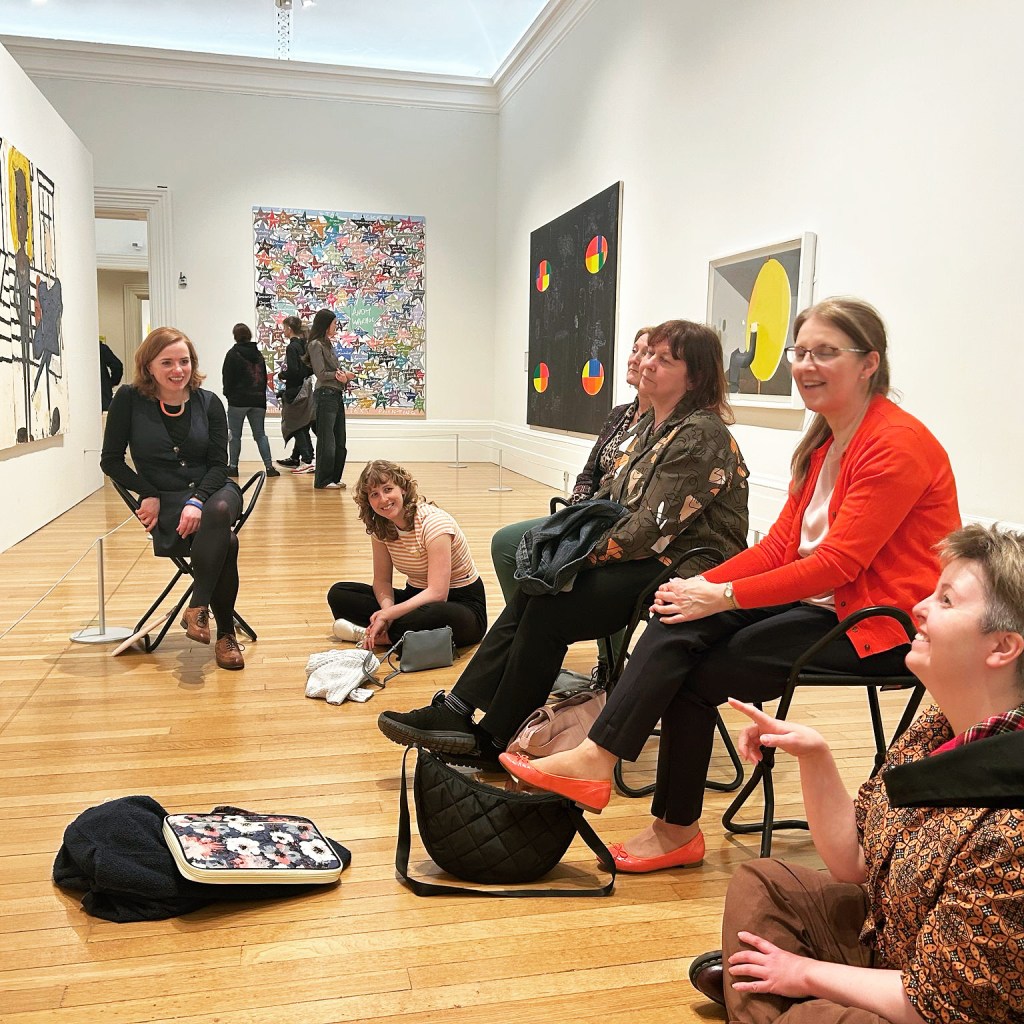
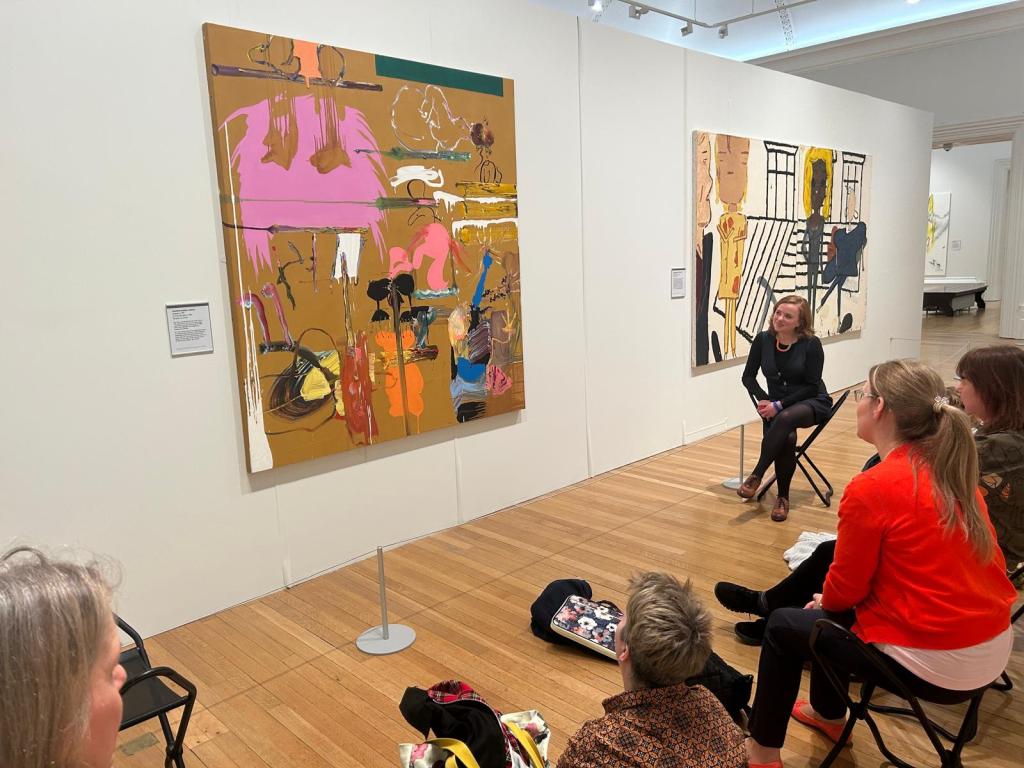
God, I’m in my element here… can you tell? Talking about art, mindfulness, mental health—and just how hard it can be sometimes to be human in the 21st century. The photographer captured a beautiful snapshot of a really great session. Thanks, Helen!
This is a glimpse of a group of strangers experiencing that all-important sense of connection.
My job as the facilitator is to create an environment—a shared dynamic—where we’re all reminded that we’ve got so much more in common than what makes us different. And when I’m working with people who have lived experience of trauma, it’s especially important to communicate this: In this group, in this moment, it’s okay. We’re okay.
It’s safe to be yourself. You can speak without worrying about being judged. No one’s here to trick you, mock you, argue, or criticise. We’re just here to talk—about art, mental health and about being human—and if you’ve got something to say about any of that then I want to hear it.
There’s power in that.
If you’re interested in trauma-informed practice in museums, galleries and heritage then get in touch – mindful.museums@gmail.com
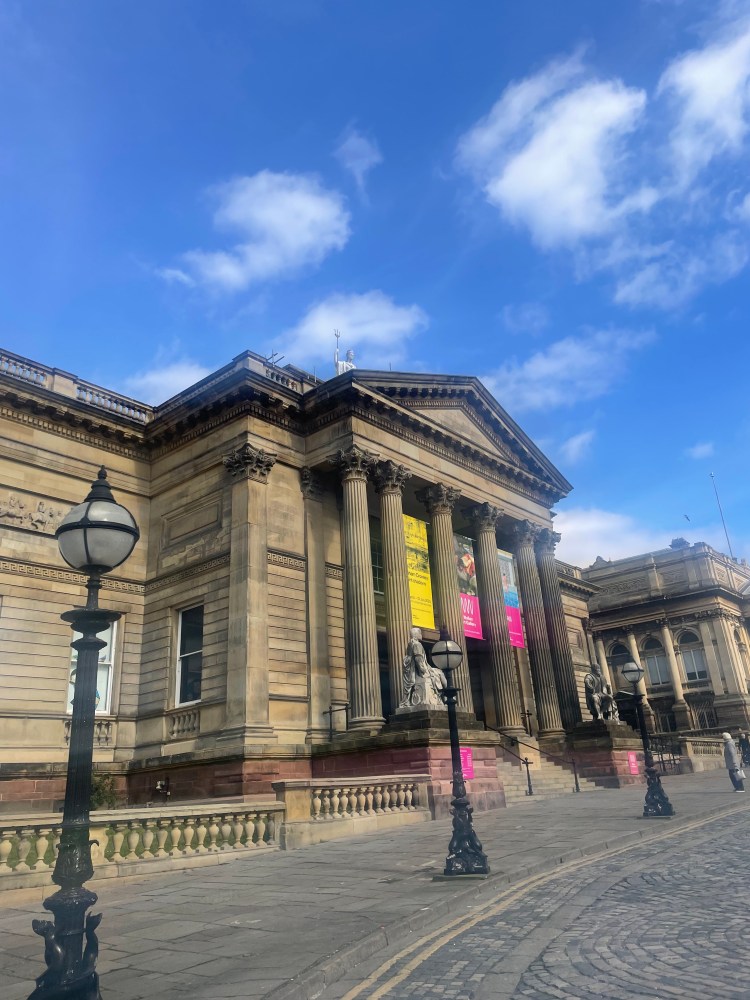
I’m off to, what is fast becoming my second city, Liverpool to deliver a creative wellbeing workshop at Walker Art Gallery for North West Federation of Artists.
A colleague asked me if I’d still be delivering workshops in my new life as a museum consultant. ‘Of course!’ I replied, probably a bit too enthusiastically, as I am known to do.
It’s true a lot of my work now focuses on consultancy and training – around topics like mindful engagement, developing creative health work, trauma-informed practice, measuring impact. But I would never want to give up face to face workshop delivery.
Why? Well, because I love it.
First and foremost, I’m a museum educator
I love learning, I believe in the power of education – I love learning from others and I love when others learn from me. That’s what floats my boat.
It gives me immense joy to share what I’ve learnt over the years about art, museums and mental health and see the impact that has on other people, institutions and peers.
Plus I believe it’s good to keep your hand in the job that you’re training other people to do. Remind yourself what it’s like and what it takes – it only leads to better things.
It’s a practice and we all know what practice makes… progress! (Because perfection isn’t the goal.)
If you interested in consultancy around arts, health, museums and everything in between you can contact me: mindful.museums@gmail.com
Happy Friday everyone, what’s been your Highlight of the Week?
Mine was zooming with the senior leaders from The Armory Arts Centre, in Pasadena, California.
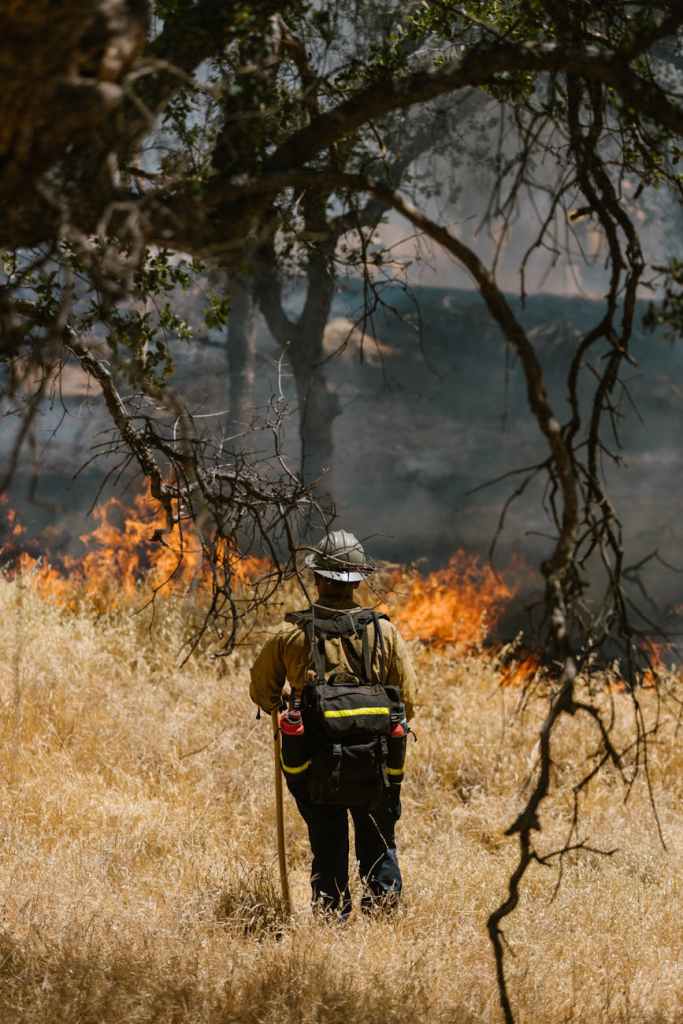
The Armory has recently been at the frontline of a major disaster with the LA wildfires decimating huge parts of their local community. They got in touch with me to discuss arts and trauma-informed practice and ways they could further support their communities, artists and staff who have been directly affected. I was touched by their genuine concern and quiet determination to respond to this very urgent need.
Manchester Together Archive
Arts and cultural organisations play an important role in responding to traumatic events that their surrounding communities experience. When disaster strikes the first question we must ask ourselves is ‘What can we do to help?’
This was certainly the question Manchester Art Gallery, in partnership with Archives + and Dr Kostas Arvanitis asked after the terrible Manchester Arena bombing in 2017. The result led to the creation of the Manchester Together Archive.
Respond – the 3rd of the 4 Rs of trauma-informed practice
One of the most effective protective factors in mitigating against the effects of trauma is ‘Who was there for us when it happened?’. In other words, who helped us? Who showed us that they cared. If we are alone and isolated during and immediately after ‘the event’; then the likelihood that we will experience it as traumatic as opposed to merely stressful or distressing increases.
Who helped? That’s what people will remember.
Art galleries, museums, public cultural services – when it happens on our doorstep we must heed the call.